False hope, it turns out, is the cruelest policy of all.
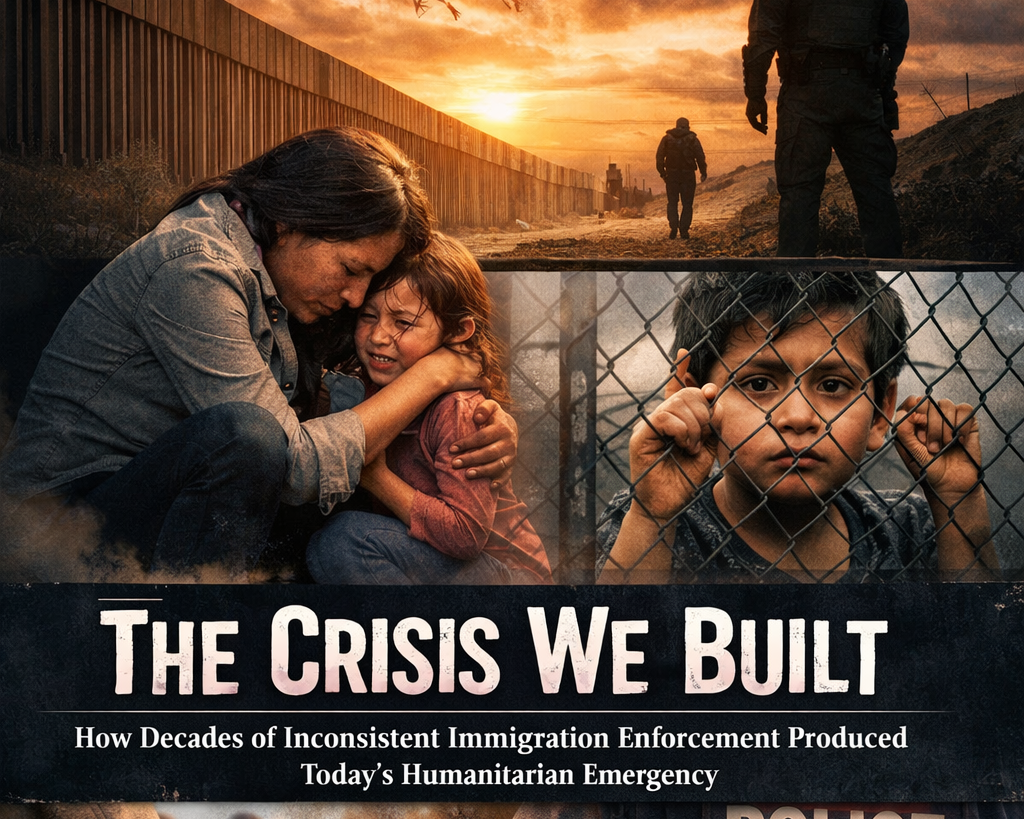
There’s a hard truth about the immigration conversation in America that almost nobody wants to touch because it forces responsibility onto all of us. We built this crisis. Not immigrants. Not border agents. Not one administration. We did, slowly and collectively, through years of pretending a broken system could be ignored without consequence. For decades, our laws said one thing while our enforcement did another. Politicians promised reform they never delivered. Courts grew backlogged. Agencies grew underfunded. People crossed, were released into the country, waited years for hearings, built families, found work, and rooted themselves into communities under the quiet assumption that stability would eventually come. That assumption was not born from malice or deception by those families. It was born from a system that refused to make timely decisions. False hope, it turns out, is the cruelest policy of all.
What we are witnessing now (families separated, children caught in enforcement actions, communities in distress) is not a sudden moral collapse. It is the predictable consequence of long-term political avoidance. A functioning immigration system does not allow millions of people to exist in legal uncertainty for years on end. It either processes claims quickly and grants lawful status where appropriate, or it issues timely removal when claims fail. Instead, we built a third path: delay everything, shift priorities with each election cycle, and let human lives grow inside an unresolved bureaucratic purgatory. When enforcement eventually returns, it does not simply apply law. It uproots lives we allowed to take root.
This is why blaming any single agency misses the point. Border enforcement did not create these vulnerable families. Our refusal to govern did. Oversight agencies warned for years that immigration courts were overwhelmed, that asylum processing was collapsing under backlogs, that statutory frameworks were outdated, and that political instability was turning law into a moving target. Those warnings were documented, public, and consistent. We chose to ignore them. Now we act surprised when the system fails exactly as predicted.
A humane immigration policy is not synonymous with open borders, nor is it synonymous with indiscriminate enforcement. A humane system is one where laws are clear, processes are timely, and outcomes are predictable. People deserve to know whether they will be allowed to stay or required to leave within a reasonable period of time. When a nation refuses to provide that clarity, it does more harm than any enforcement action ever could. It sells hope without structure and then punishes those who believed it.
So when we see children in detention or families torn apart, the instinct is to look for villains in uniforms or parents who made desperate choices. But the deeper responsibility belongs to a nation that allowed disorder to replace law and indecision to replace governance. We are not witnessing the cruelty of enforcement. We are witnessing the cruelty of prolonged avoidance finally colliding with reality.
America does not need louder arguments about compassion or toughness. It needs a system that works — one that enforces borders consistently, processes cases efficiently, modernizes legal pathways, and tells the truth rather than selling illusions. Because the most compassionate policy a country can offer is not false hope. It is honest structure. And until we build that, we will keep reliving the same crisis we created.
